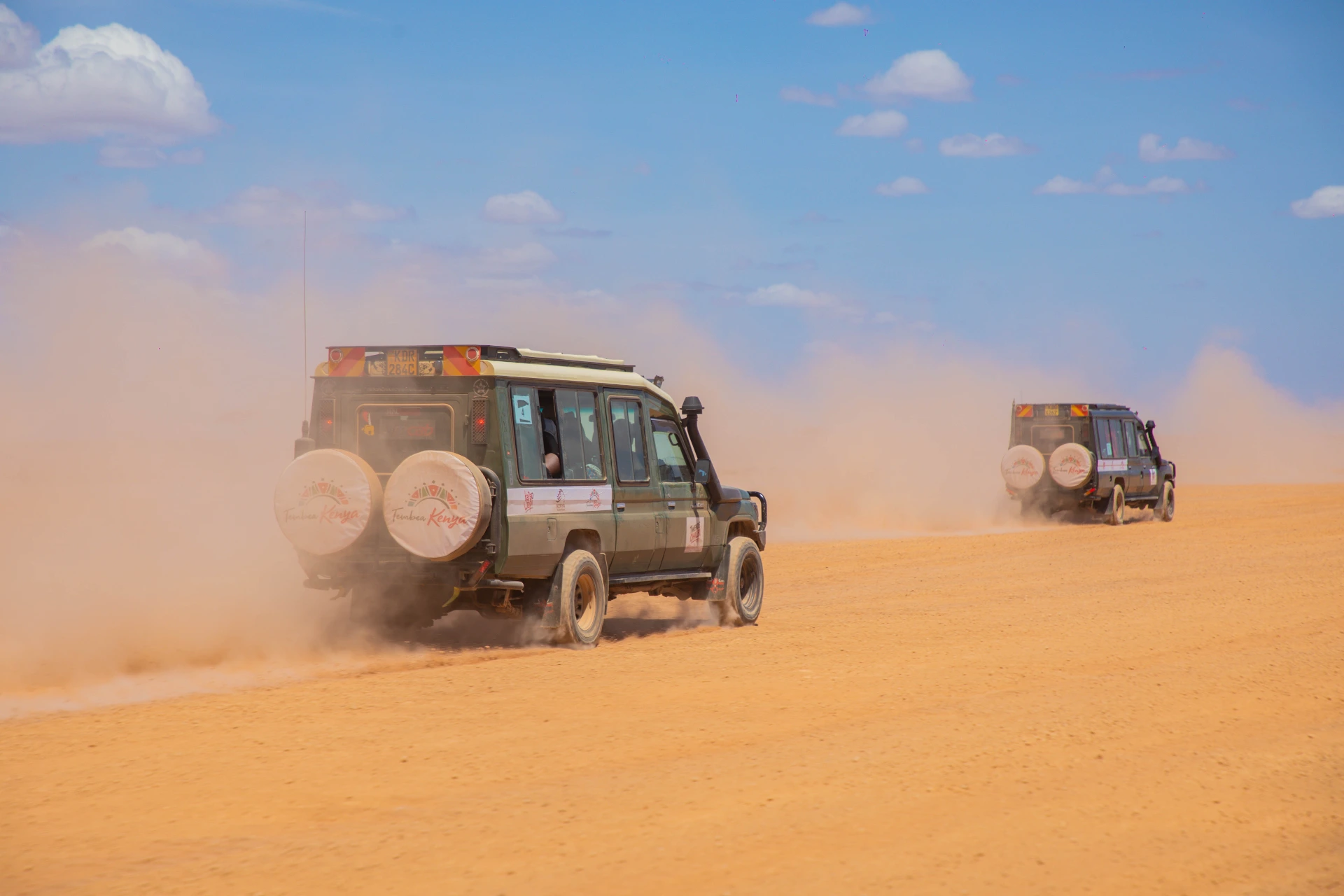
The Northern Kenya rewards travellers who go slowly, ask questions and listen to local guides. Here are the six places to put on your list.
Introduction
The best places to visit in Northern Kenya are the Chalbi Desert in Marsabit County, Lake Turkana, Samburu National Reserve, the Namunyak Conservancy, the Reteti Elephant Sanctuary and
Mount Ololokwe.
Together they make some of the most unique places to visit in Kenya, and in 2026 the Kenya Tourism Board (KTB) put them in the spotlight with the #TwendeChalbi campaign.
Picture this. It is 5:30 AM in Nairobi and the city is still yawning. You pull onto the highway north with a flask of tea, a playlist you will regret by lunchtime, and a window seat on the Kenya most of us only see on social media.
The farms and the cold of Mount Kenya's slopes fall away. The air gets drier. The land opens up, the horizon stretches, and a huge flat-topped mountain appears on your right as if someone had sliced
off its head. You are in Samburu County.
That was Day One of #TwendeChalbi: Nairobi, Samburu, Marsabit. By the time you reach the desert, the colors have changed from green to gold, and your phone has more photos than your memory card can handle.
Crazy Kennar, whose real name is Kennedy Odhiambo, is one of Kenya's biggest online comedians, which is exactly why a rock slide in Samburu County is suddenly trending!
Want to have ultimate tour experiences in Kenya out of the ordinary in the Northern Kenya? Safari Yetu Adventures got you covered.
So pack the sunscreen, charge the phone, and let's go north!

What Is the Twende Chalbi Campaign?
The Twende Chalbi campaign is the first leg of the Magical Kenya Tembea Kenya campaign, the Kenya Tourism Board's new sales drive known as Tembea Kenya - Hapa Ni Wapi. Twende is a
Swahili term for "let's go", and Hapa Ni Wapi means "where is this?", the question Kenyans ask when they see a stunning photo of a place they did not know existed.
Here is what makes the Magical Kenya Tembea Kenya campaign different from earlier ones:
- It sells trips, not just dreams. KTB says the goal is to turn domestic interest into actual bookings, with affordable, clearly priced and readily bookable holiday packages.
- Fifty tour operators are on board. They come from the Tour Operators Society of Kenya (TOSK) and the Kenya Association of Tour Operators (KATO), with accommodation providers and county governments.
- The North comes first. The campaign was flagged off in Samburu in late September 2026, with the Chalbi Desert and the wider Northern Kenya circuit as the first destination. Mambrui, Malindi and Western Kenya follow.
- There is a target. KTB wants 5.6 million domestic bed nights, up from 5.15 million in the 2025/26 financial year.
The campaign is also fun to follow online. Magical Kenya's channel has posted a series of Shorts under the #TwendeChalbi hashtag, including one titled "Crazy Kennar Takes on Rock Sliding", a
companion with DJ Pierra Makena, and a "Day One" recap that ends in Marsabit. NTV's Twende series adds full episodes from Ngurunit, the Chalbi rock dune, El Molo Bay, Loiyangalani and
Sibiloi National Park.
The hashtag may be new, but the places are ancient. Let's meet them.
The Six Best Places to Visit in Northern Kenya
1. Chalbi Desert: Visit Chalbi Desert for Kenya's Biggest Sky
If you want to visit Chalbi Desert, start here. Magical Kenya describes Chalbi, in Marsabit County, asa vast landscape of open plains, volcanic formations, sand dunes and endless horizons. In the language of the Gabra people, Chalbi means "bare, salty area", and the name fits. It is a rain-shadow desert with strong winds, and when rare heavy rain falls, water pools on the hard ground.
Why visit Chalbi Desert in Kenya?
The scale. Salt flats, dunes and rock stretch to the horizon, and the sunsets are huge.
Kalacha. This oasis town on the desert's northern edge is home to the Kalacha Catholic Church, built partly into the ground against volcanic rock.
The Chalbi rock dune. NTV's Twende team calls it a place where golden dunes and rugged landscapes meet, and it is made for photographers.
Culture. The Gabra, Rendille and other communities have lived in this landscape for generations. Hire local guides and ask before taking photos of people.
A surprise. The largest wind farm in Africa sits on the desert's western edge.
The chair of the Tour Operators Society of Kenya has described Chalbi as a more affordable alternative to a trip to Dubai. That is the kind of desert holiday you can book from Nairobi.
2. Lake Turkana: The Jade Sea
Lake Turkana is the world's largest permanent desert lake, and from a distance its water shifts between jade and turquoise, which is why it is called the Jade Sea. The color comes from algae that rise to
the surface when the water is calm.
The lake's three national parks, Sibiloi, Central Island and South Island, make up a UNESCO World Heritage Site. The region is rich in wildlife, with more than 350 bird species and some of the largest Nile crocodile populations on the planet. Near Loiyangalani, the El Molo community has fished the lake for generations, and the new Loiyangalani Desert Cultural Museum documents the traditions of the communities around the lake, including the Turkana, Samburu, Rendille, El Molo and Dassanech.
History lovers should note that the campaign is also highlighting archaeological sites such as Ileret, which is linked to early human history.

3. Samburu National Reserve: The Land of the Special Five
Samburu is the gateway to the north, and it is one of the best places to visit in Northern Kenya for wildlife without the crowds. Look for the so-called Samburu Special Five: Grevy's zebra, reticulated giraffe, Somali ostrich, gerenuk and beisa oryx, species you will not see on the classic southern circuits.
Samburu matters to its people too. At the campaign launch, the reserve's director said it accounts for about 85 percent of Samburu County's own-source revenue, and that hiking, rock climbing and paragliding are among the adventures being opened up to visitors. For a deeper look, read our guide to a 3-day Samburu safari.
4. Namunyak Conservancy: Where the Community Is the Ranger
Namunyak is a community conservancy owned by the Samburu people, set along the Mathews Range. It is a living example of community-led conservation, where tourism income, wildlife
protection and local livelihoods are linked. Visitors come for game drives, guided bush walks and a chance to meet Samburu families and learn about their culture.
Namunyak is also where you will find the next stop on our list.
5. Reteti Elephant Sanctuary: Africa's First Community-Owned Elephant Sanctuary
Reteti is the first community-owned and community-run elephant sanctuary in Africa, opened in 2016 to rescue orphaned calves and return them to the wild. Its keepers come from the Samburu community, and Reteti was the first sanctuary on the continent to employ female elephant keepers.
Reteti welcomes visitors, and it is an easy way to turn a trip into something that matters. The sanctuary's work also reaches beyond elephants: its Milk to Market programme involved 1,280 "Milk Mamas" across 21 homesteads in 2024, turning local goat milk into income. Book through an operator so your visit follows the sanctuary's guidelines.

Credits: RetetiElephant Sanctuary
6. Mount Ololokwe: The Sacred Table Mountain
On the Nairobi-Moyale highway, a massive flat-topped mountain rises above the dry plains. That is Mount Ololokwe, whose name in Samburu means "wide head". For the Samburu it is sacred: womentrek to its summit to pray to Enkai for rain during long droughts, and families rely on its high pastures in dry seasons.
For travellers, it is one of the best hikes in the country. Most groups start before dawn, when it is cool, to reach the top for sunrise over the Samburu plains and the Mathews Range. The daytime heat makes midday climbs a bad idea.
A Bonus: Ngurunit Rock Slides
If Crazy Kennar's rock sliding has you curious, head to Ngurunit in Samburu County, where natural rock slides drop into clear pools carved by erosion. Wear shoes with grip, go with a local guide, and keep your phone in a waterproof pouch.
Why Visit Northern Kenya Now?
It is one of the most unique places to visit in Kenya.
The north has landscapes and cultures you will not find on the classic southern safari routes. Crowds are small, the sky is huge and the stories are local.
Your trip does real good. Tourism income helps Samburu County and community conservancies. Staying with local operators and guides means your money stays in the north.
The packages are ready. The Magical Kenya Tembea Kenya campaign was built so Kenyans can book, not just dream. KTB also says road and air access to the north is improving.
It is a place with a story. A flat-topped mountain, a jade lake and a desert you can see from space make for better travel stories than another hotel pool.
How to Plan Your Northern Kenya Trip
How long: To visit Chalbi Desert , allow at least five to seven days. The distances are long and the best moments happen when you are not rushing.
- How to get there: Most travellers drive from Nairobi through Isiolo to Samburu and Marsabit, or fly into airstrips at places like Namunyak and Loiyangalani. Reteti is about an eight-hour drive from Nairobi.
- What to pack: A wide-brimmed hat, sunscreen, a scarf for wind and dust, sturdy shoes, a power bank, reusable water bottles and a waterproof phone pouch.
- When to go: The north is hot all year. Heavy rain can flood the flats and slow roads, so check conditions with a local operator before you travel.
- How to travel well: Ask before photographing people, buy local crafts, stay at community-owned camps and take your litter with you.
A sample route might run from Nairobi to Samburu and Mount Ololokwe, on to Namunyak and Reteti, north to Marsabit and the Chalbi Desert, and finish at Lake Turkana. We tailor every northern Kenya itinerary to your dates, budget and fitness. See our northern Kenya conservation tours, or contact our team.
Why Trust This Tembea Kenya Guide?
We are Safari Yetu Adventures, a Nairobi-based tour operator. This guide draws on the Kenya Tourism Board's own campaign announcements, reporting from Citizen Digital, The Standard and
KBC, the Reteti sanctuary's published reports, and local cultural sources. Every claim links to its source, and we update the page as the campaign grows.
Ready to Visit Northern Kenya?
Looking for unique places to visit in Kenya? Start in the north. The Twende Chalbi campaign says it in one word: twende. Let's go.
Plan my Northern Kenya trip, call +254 794 000 555 or +254 719 314 061, or email info@safariyetuadventures.com. Read some of the articles we have such as;
The best places to visit around the world in 2027
The best luxury safaris in Kenya
The best places to go for honeymoon in Kenya and Africa
Frequently Asked Questions About Northern Kenya
Here are the frequently asked questions about the Tembea Kenya Twende Chalbi Campaign
1. What are the best places to visit in Northern Kenya?
The best places to visit in Northern Kenya are the Chalbi Desert, Lake Turkana, Samburu National Reserve, the Namunyak Conservancy, the Reteti Elephant Sanctuary and Mount Ololokwe. Together they offer desert, lake, wildlife, culture and hiking.
2. What is the Twende Chalbi campaign?
The Twende Chalbi campaign is the first leg of the Kenya Tourism Board's Tembea Kenya - Hapa Ni Wapi sales campaign. It promotes the Chalbi Desert and the Northern Kenya circuit with ready-to-book packages from around 50 tour operators.
3. Where is the Chalbi Desert?
The Chalbi Desert is in Marsabit County in northern Kenya, east of Lake Turkana and near the Ethiopian border. Kalacha, an oasis town about 110 kilometres north-west of Marsabit town, sits on its northern edge.
4. Can I visit Chalbi Desert as a domestic traveller?
Yes. The Twende Chalbi campaign was designed for Kenyan travellers, with affordable, clearly priced packages from licensed tour operators. Book with an operator who knows the roads and the communities.
5. What is the Magical Kenya Tembea Kenya campaign?
The Magical Kenya Tembea Kenya campaign is the Kenya Tourism Board's domestic tourism drive, which encourages Kenyans to explore their own country. Its Hapa Ni Wapi sales campaign focuses on turning interest into bookings.
6. What are the most unique places to visit in Kenya?
For unique places to visit in Kenya, many travellers pick the Chalbi Desert, Lake Turkana, Mount Ololokwe, the Reteti Elephant Sanctuary and the Ngurunit rock slides. They offer landscapes and
cultures you cannot find on the classic safari routes.
7. Is Northern Kenya safe to visit?
Travel to the north is well established with licensed operators and local guides. Check current conditions and official travel advice before you go, travel with an experienced operator, and avoid self-driving in remote areas.
8. How do I book a trip to Northern Kenya?
Send us your dates, group size and interests, and tell us if you want to visit Chalbi Desert, Lake Turkana or both. We will send a tailored itinerary and quote. Quotes do not hold reservations, and
rates depend on availability at booking.