Every safari brochure mentions the Big Five. It is one of the most recognisable concepts in wildlife travel, and also one of the most frequently misunderstood. Where did the term come from? What exact
Every safari brochure mentions the Big Five. It is one of the most recognisable concepts in wildlife travel, and also one of the most frequently misunderstood. Where did the term come from? What exactly is the Big Nine? And more importantly, which of these animals will you actually see on a Kenya safari? This guide answers all of it.
1. The Big Five: Origin and Meaning
The term 'Big Five' was coined not by safari guides or conservationists, but by big game hunters in the 19th and early 20th centuries.
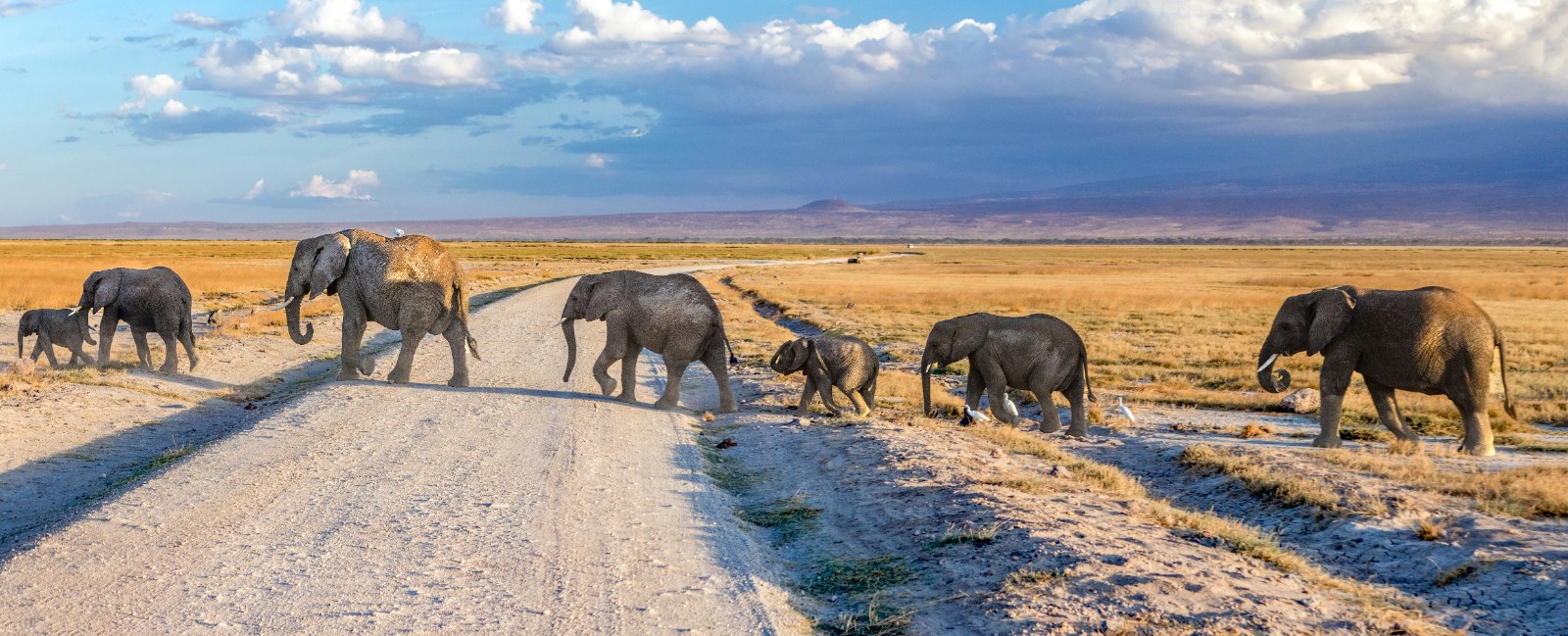
It referred to the five animals considered most dangerous and difficult to hunt on foot: lion, leopard, elephant, Cape buffalo, and rhinoceros. The 'big' referred not to their size but to the challenge and perceived risk they represented.
Today the term has been entirely repurposed for photographic safaris, and the danger angle is largely irrelevant, except as a reminder to maintain sensible distances. What the Big Five still reliably indicates is that you are visiting an ecosystem rich enough to sustain Africa's most demanding megafauna.
2. The Big Five in Kenya
Kenya is one of very few destinations where all five can be seen in a single trip. A classic 7-night itinerary combining the Maasai Mara, Amboseli, and Ol Pejeta Conservancy covers all five with relative confidence.
3. Rhino in Kenya: A Special Note
Both black and white rhinoceros were once widespread across Kenya. Poaching reduced their numbers to near-extinction by the late 1980s. Today Kenya has approximately 1,000 black rhino, among the largest populations remaining anywhere, and a growing white rhino population anchored at Ol Pejeta Conservancy, which also holds the world's last two northern white rhinos.
Ol Pejeta is widely regarded as the finest rhino sanctuary in Africa. It is a two-hour drive north of Nairobi in the Laikipia region, and can be combined with Samburu, Mt Kenya, or a Nairobi stopover.
4. The Big Nine: Kenya's Expanded List
Africa's safari industry has introduced the Big Nine to account for species that, while not part of the traditional list, are equally spectacular and sought-after. The additions vary slightly by region, but Kenya's commonly accepted Big Nine adds:
| Cheetah (Duma) | Kenya has some of the continent's highest cheetah densities, particularly in the Mara. |
| Hippopotamus (Kiboko) | Abundant at Maasai Mara's hippo pools, Naivasha, and along the Mara River. |
| Giraffe (Twiga) | Three species represented. Maasai giraffe in the south, reticulated giraffe in the north. |
| Wild Dog (Mbwa Mwitu) | Rare but present; best chances in Laikipia and occasionally the Mara. |
Completing the Big Nine requires broader geographic coverage than the Big Five, the wild dog alone may necessitate a dedicated Laikipia visit. But Kenya is one of very few countries in Africa where all nine species are within reach.
5. Beyond the Lists: What Else Will You See?
Lists are useful frameworks, but Kenya's wildlife richness goes far beyond any numbering system. Even a standard 5-night Maasai Mara safari will typically add:
Spotted hyena, black-backed jackal, silver-backed jackal, bat-eared fox, serval, warthog, baboon, vervet monkey, topi, eland, kongoni (hartebeest), waterbuck, impala, Thomson's and Grant's gazelle, and hundreds of bird species.
The question on a Kenya safari is never 'will we see animals?' It is 'how close will we get, and for how long?'
6. Kenya's Checklist by Park
Our guides track the Big Five daily and know exactly which parks offer the best chances for each species. For more details, read our Amboseli elephant herds. For more details, read our Lake Nakuru rhino sanctuary. For more details, read our Maasai Mara predator sightings.