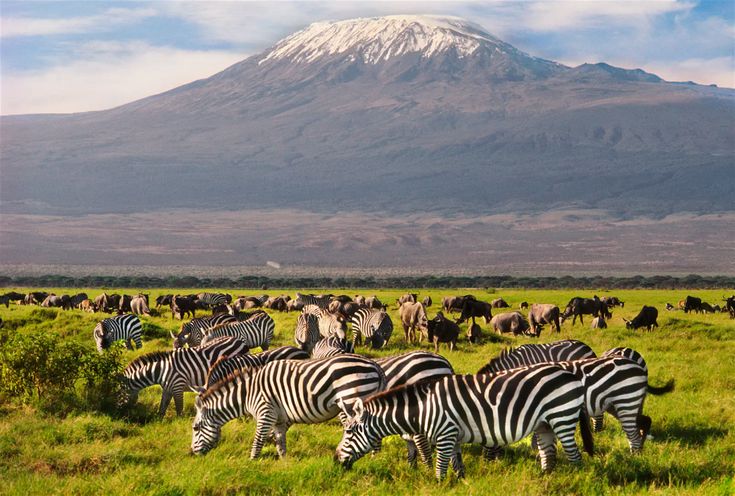
There's no view in Africa quite like a herd of elephants silhouetted against the snow-capped peak of Kilimanjaro at dawn. Amboseli National Park delivers this image with a reliability that borders on the theatrical — and yet it never feels staged. It's just what Amboseli does.
The View That Stops You Mid-Sentence
Amboseli sits at the foot of Mount Kilimanjaro, Africa's highest peak at 5,895 metres, straddling the Kenya-Tanzania border. On a clear morning — and mornings in Amboseli are often spectacularly clear — the mountain dominates the southern horizon in a way that makes everything else feel small. The flat, open landscape of the park means you can see for extraordinary distances, and the combination of that vast sky, the mountain, and the elephants moving through the dust creates images that photographers travel from every continent to capture.
The park itself covers 392 square kilometres, which makes it relatively compact by Kenyan standards. That compactness is actually an advantage — you're never far from the action, and the open terrain means wildlife is visible from great distances. The central swamps fed by underground water from Kilimanjaro's snowmelt keep the park green even in dry seasons, drawing wildlife from across the surrounding ecosystem.
Amboseli's Elephant Families: The Most Studied in the World
Amboseli is home to one of the most famous elephant research projects in history. The Amboseli Elephant Research Project, founded by Cynthia Moss in 1972, has been running continuously for over 50 years — making it the longest-running elephant study in the world. Researchers have documented the lives of over 1,500 individual elephants across multiple generations, giving us an extraordinary window into elephant society, communication, and cognition.
What this means for visitors is that Amboseli's elephants are exceptionally habituated to vehicles. They go about their lives — feeding, socialising, caring for calves, sparring — with complete indifference to the presence of game drive vehicles. You can sit within metres of a family group and watch the matriarch lead her family to water, calves stumbling along beside their mothers, young bulls testing their strength against each other. It's intimate in a way that few wildlife experiences can match.
The elephants here also tend to have large tusks — a genetic trait that has been preserved partly because Amboseli's elephants have been relatively well protected from poaching. Seeing a large bull with tusks that sweep almost to the ground is not unusual in Amboseli. In many other parks, such animals are increasingly rare.

Beyond Elephants: What Else Lives in Amboseli
Amboseli's reputation rests on its elephants, but the park supports a surprisingly diverse cast of wildlife. The swamps and their margins are excellent for buffalo, hippo, and a wide variety of waterbirds — over 600 species have been recorded in the greater Amboseli ecosystem, making it a serious destination for birders. Pelicans, herons, storks, and kingfishers are all common around the water.
The open plains support large herds of zebra and wildebeest, particularly during the wet season when the grass is lush. Giraffe are common, and the Maasai giraffe subspecies found here is the tallest of all giraffe subspecies. Lion and cheetah are present, though sightings are less reliable than in the Mara — the open terrain actually makes cheetah hunting more visible when you do find them, which is a genuine highlight.
Hyena are abundant and often seen in large clans around the swamp edges at dawn. Jackal — both black-backed and side-striped — are common. And the birdlife around the swamps is genuinely world-class, with species like the African fish eagle, saddle-billed stork, and various kingfishers all reliably present.
Best Time to Visit Amboseli
Amboseli is a year-round destination, but the dry seasons — January to March and July to October — offer the best wildlife viewing. During the dry season, animals concentrate around the permanent swamps, making them easier to find and observe. The vegetation is lower, improving visibility, and the dust that Amboseli is famous for creates atmospheric conditions that photographers love.
The wet seasons (April–May and November) bring lush green landscapes and excellent birding, but some tracks become impassable and the mountain is more frequently obscured by cloud. That said, the green season has its own beauty, and prices are significantly lower. If you're on a budget and flexible about the mountain view, the green season is worth considering.
For the iconic Kilimanjaro backdrop, early morning is essential. The mountain is typically clear at dawn and clouds over by mid-morning. Plan your game drives to be out at first light — which in Kenya means leaving camp around 6am.
Where to Stay: From Budget to Luxury
Amboseli has accommodation options across a wide range of budgets. At the luxury end, camps like Tortilis Camp and Ol Tukai Lodge offer exceptional service, excellent guiding, and prime locations within or adjacent to the park. These properties typically include full-board accommodation, game drives, and guided walks in the surrounding Maasai community areas.
Mid-range options include several comfortable lodges and tented camps that offer good value without compromising on the core experience. Budget travellers can find basic bandas and campsites within the park, though these require more self-sufficiency. For most visitors, a two to three night stay is sufficient to experience the best of Amboseli — though if you're serious about photography, three to four nights gives you more opportunities to catch the mountain clear.
Safari Yetu Tip
Early morning game drives (6–9am) give you the best chance of elephants with Kilimanjaro before clouds build. The mountain is almost always clear at sunrise — by 10am, it's often hidden. Set your alarm, get out early, and let the light do the rest.
Frequently Asked Questions
Is Kilimanjaro always visible from Amboseli?
No — and that's the honest answer. Kilimanjaro creates its own weather system, and clouds typically build around the summit by mid-morning. The best window is early morning, roughly 6–9am, when the mountain is most likely to be clear. It's also worth knowing that the mountain is more reliably visible during the dry seasons (June–October and January–March) than during the rains. Some guests see it every morning; others wait three days for a clear view. When it does appear, it's worth every minute of waiting.
How many days should I spend in Amboseli?
Two nights is the minimum — that gives you three game drives and a reasonable chance of both elephants and a clear Kilimanjaro. Three nights is better, especially if photography is a priority. Four nights is ideal for serious photographers who want multiple sessions in different light conditions. Amboseli is compact enough that you won't run out of things to see, but you will run out of time if you only stay one night.
What is the best time of year to visit Amboseli?
June to October and January to March are the prime windows — dry weather, clear skies, and excellent wildlife viewing. The elephant herds are particularly concentrated around the swamps during the dry season when water is scarce elsewhere. The green season (April–May and November) brings lush landscapes and newborn animals, but the mountain is more frequently obscured by cloud and some tracks can become muddy.
Can I combine Amboseli with other parks?
Yes — Amboseli works well as part of a southern Kenya circuit. The most popular combination is Amboseli with Tsavo East or West (2–3 hours by road), giving you the elephant-and-mountain experience alongside Tsavo's vast red-earth wilderness. Adding the Maasai Mara creates a comprehensive Kenya safari covering three very different ecosystems. Safari Yetu Adventures can design a joined-up itinerary with road or flight connections between all three.
Are there elephants in Amboseli year-round?
Yes. Amboseli's elephant population is resident — these are not migratory herds. The park is home to one of Africa's best-studied elephant populations, with some families having been observed and documented for over 50 years. You will see elephants on every game drive. The question is never whether you'll see them, but how close and in what light.